
Ethernet Cable Stripper Tool - CAT5e/6/6A/7/8 Multi-Purpose
Couldn't load pickup availability
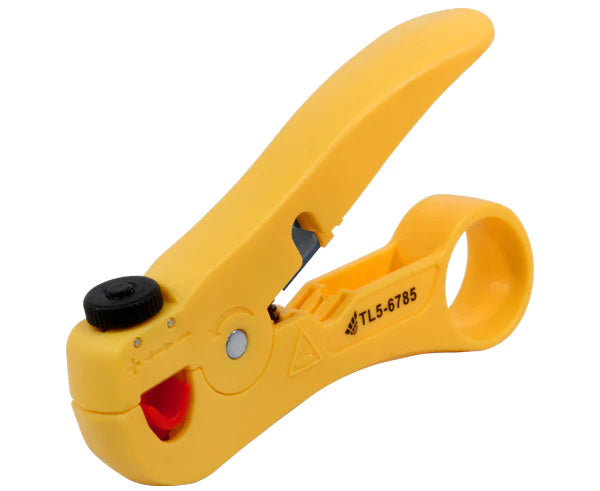
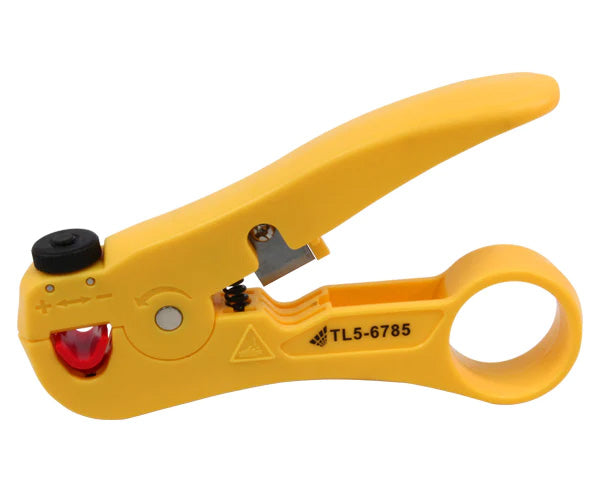
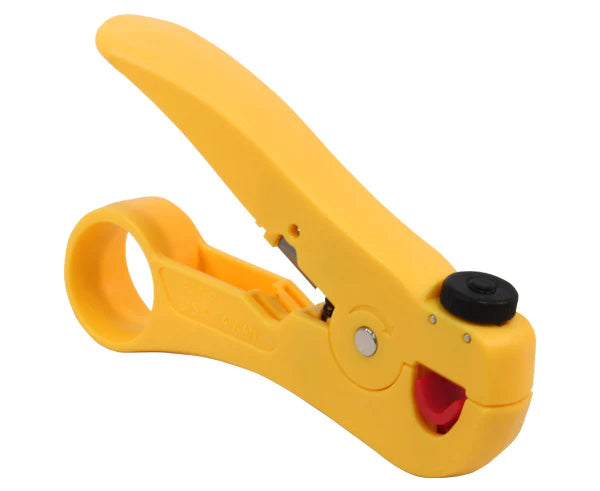
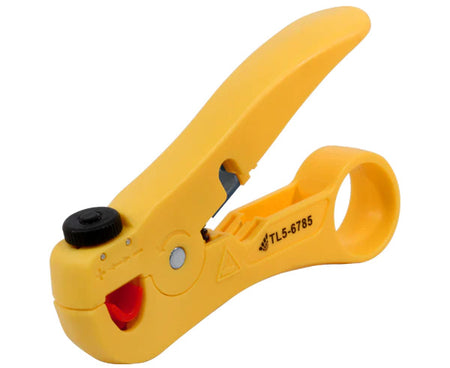
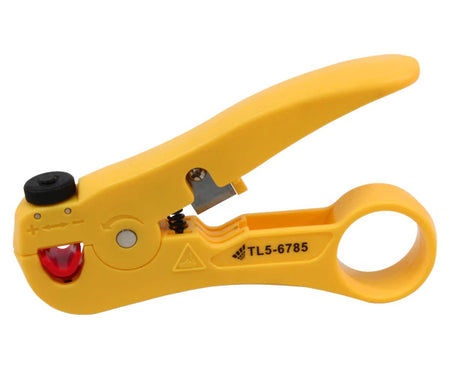
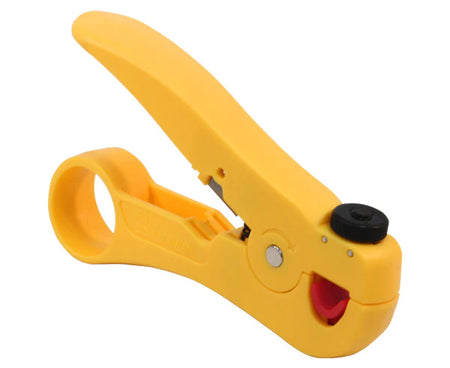
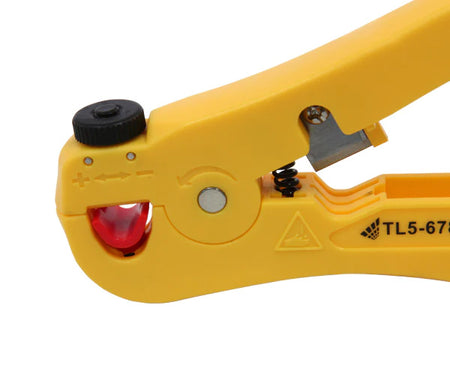
Stripping the jacket off a twisted-pair cable is the first step of every termination and the one most likely to nick a conductor, since a knife or a fixed-depth stripper doesn't know the difference between a thin Cat5e jacket and a thick shielded Cat8 one. This stripper does: a turn-knob sets the blade depth for the cable in hand, a self-adjusting guide centers the cable whatever its diameter, and a spring-loaded blade makes the same cut every time. Slip the cable in, spin the tool around it once using the large finger loop, and the sheath comes off without your hand ever leaving the loop. It works on Cat5e, Cat6, Cat6A, Cat7, and Cat8, unshielded or shielded, and the blade retracts on its own when the cable comes out. The housing is high-impact plastic, it weighs next to nothing, and it lives in a pouch or a shirt pocket.
Features
- Cat5e through Cat8. One tool for every standard twisted-pair Ethernet cable, with no switching between cable types.
- UTP and STP. Strips unshielded and shielded cable alike; set the depth for the thicker jacket on shielded types.
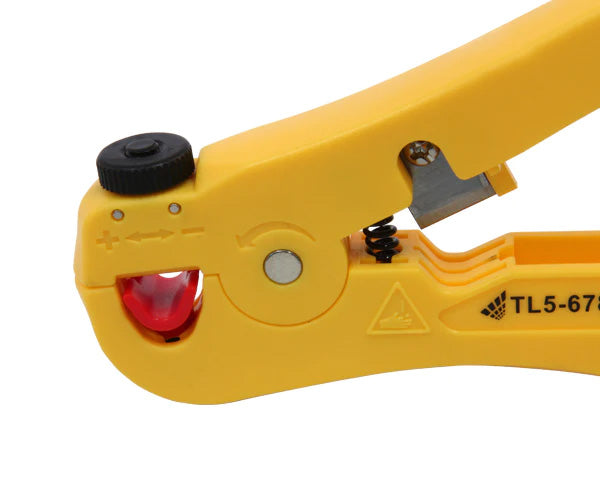
- Adjustable blade depth. A turn-knob sets the cut for the cable's diameter, so the blade scores the jacket and stops before the pairs.
- Self-adjusting cable guide. Centers cables of different sizes in the blade without resetting anything else.
- Spring-loaded cutting action. The same pressure and the same cut on every cable.
- Spin-to-strip finger loop. A large ergonomic loop lets the tool rotate 360 degrees around the cable, so the sheath comes off in one turn with no hand repositioning.
- Automatic blade retraction. The blade pulls back when the tool comes off the cable.
- High-impact plastic housing. Lightweight and portable, built to survive the pouch.
Where It Fits
It suits network installers terminating keystone jacks and patch panels on a run of drops, where every jacket has to come off at the same depth without touching a pair, IT and facilities staff making up patch cords or re-terminating a damaged end, security and AV installers whose cameras and controllers run on Cat6, anyone moving between unshielded Cat6 and shielded Cat6A or Cat8 on the same job and tired of carrying two strippers or a knife, apprentices and home-network builders who want a tool that makes a clean strip the default, and a drawer or a pouch where a stripper this size and price is easy to keep next to the crimper and the punch-down tool.
Good to Know
Set the depth on a scrap of the cable before the first real strip: turn the knob out, strip, and if the jacket doesn't come off cleanly turn it in a little at a time until it does, then stop. Too deep is the setting that scores a pair's insulation, and a nicked conductor in a Cat6A or Cat8 run is a fault you won't see until the certifier flags it. Reset the depth when the cable changes; a shielded cable has a thicker jacket plus a foil or braid under it, and on shielded cable the blade should stop at the jacket so the shield and its drain wire stay intact for the connector. Rotate the tool a full turn with steady pressure and pull the slug off straight, and strip only as much jacket as the jack or the connector needs, since the untwisted length behind the termination is what costs you on a Cat6A test. The tool strips the outer jacket; it isn't for the pair insulation, which the jack or connector handles, and it isn't for coax or round power cable. Keep the finger loop and the guide free of jacket crumbs so the cable seats square. The blade retracts on its own, but it's still a blade; keep fingers out of the slot.
Specifications
| Spec | Detail |
|---|---|
| Series | TLC-031 |
| Type | Ethernet cable jacket stripper, spin to strip |
| Cable Types | Cat5e, Cat6, Cat6A, Cat7, Cat8 twisted pair |
| Shielding | UTP (unshielded) and STP (shielded) |
| Blade Depth | Adjustable, turn-knob |
| Cable Guide | Self-adjusting, for various cable diameters |
| Action | Spring-loaded blade, automatic retraction |
| Handling | Large finger loop, 360-degree rotation |
| Housing | High-impact plastic |