
Cat8 Shielded Keystone Jack, 180° Tool-less, 40G (CAT8SH-KEY)
Couldn't load pickup availability
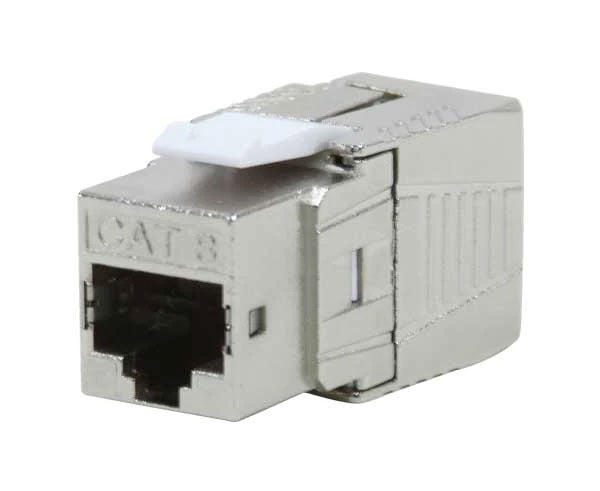
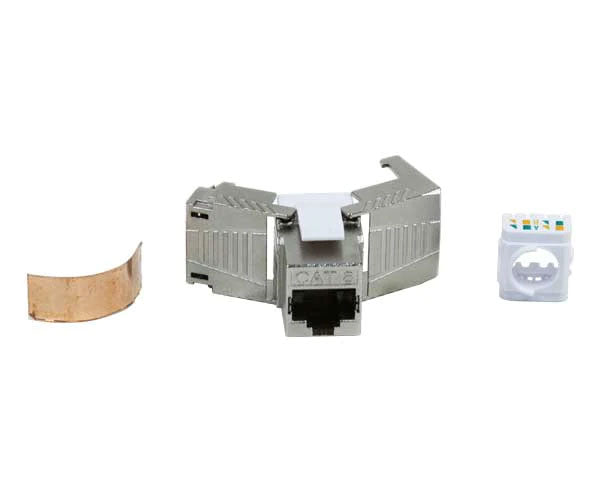
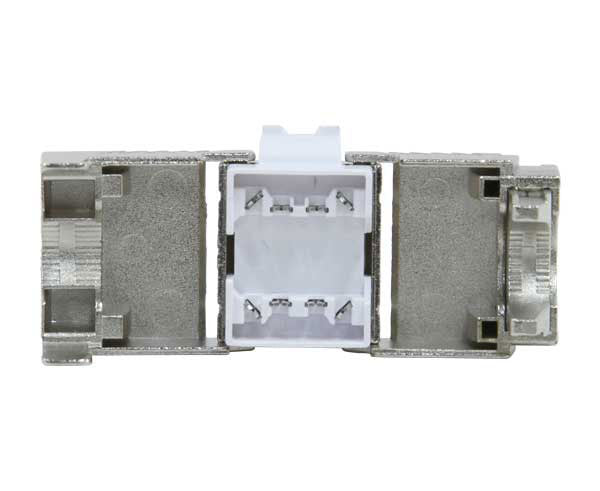
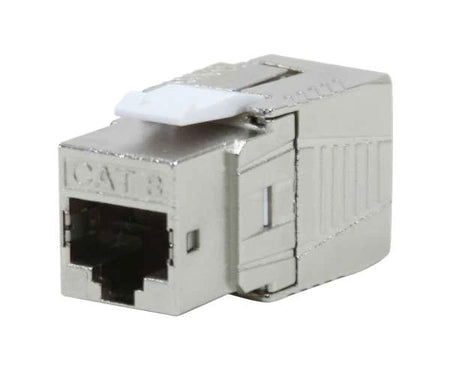
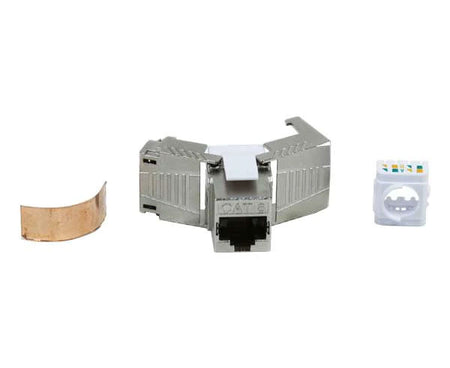
Forty Gigabit over copper is a 2 GHz signal that only goes 30 m, and every connection in that channel has to be built for it. This shielded Cat8 keystone jack is component rated for 40GBASE-T at 2 GHz: a nickel-plated zinc die-cast housing that carries the cable shield through to the plug and screens the termination from EMI and alien crosstalk, on a UL 94 V-0 PCB with phosphor bronze IDC contacts and 50 microinches of gold on the plug contacts. It terminates from the rear at 180 degrees, so the cable comes straight in with no bend behind the plate, and it closes by hand with the IDC cap, no punch-down tool needed. The pair-keeping design holds each pair twisted to the contact, the T568A and T568B color codes are printed on the jack, and it takes the solid or stranded 22 to 24 AWG that Cat8 cable is made in. It's rated for PoE++ at 100 W under 802.3bt, 750 mating cycles, and ISO/IEC 11801 and ANSI/TIA-568.2-D, it's UL compliant, and it's backward compatible with Cat6A, so a Cat8 jack today is a 10G jack until the switch catches up. For Cat6A, the MIG6A-SHD is the same 180 degree shielded jack a category down.
Features
- Cat8, component rated for 40G at 2 GHz. ISO/IEC 11801 and ANSI/TIA-568.2-D performance through the jack; backward compatible with Cat6A.
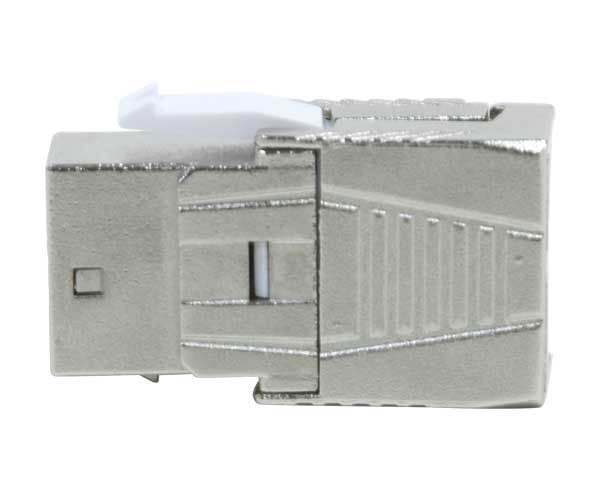
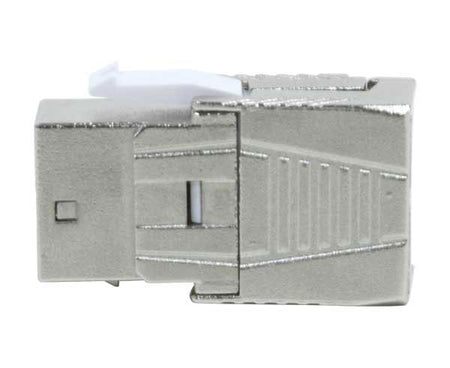
- Nickel-plated zinc die-cast shielded housing. Carries the cable shield through and screens the jack against EMI and alien crosstalk.
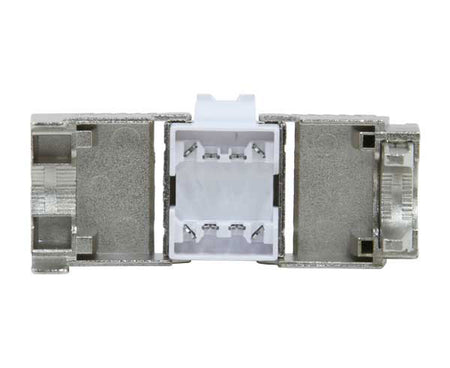
- 180 degree rear termination. Cable enters straight from behind, for shallow boxes and high-density panels; slim profile.
- Tool-less termination. Closes with the IDC cap and no punch-down tool.
- Pair-keeping design. Holds the pairs twisted to the IDC for the untwist 40G needs.
- PoE++ ready. 802.3bt 4PPoE up to 100 W.
- Gold-plated plug contacts, phosphor bronze IDCs. 50 µin gold over nickel; 750 mating cycles minimum; 7.7 kg plug retention.
- Solid and stranded 22 to 24 AWG. Integrated T568A and T568B wiring label.
- UL compliant.
Where It Fits
It suits data center and server room techs terminating Cat8 for 25G and 40GBASE-T between a top-of-rack switch and the servers below it, structured cabling installers on a build that specs Cat8 for the backbone between closets inside the 30 m limit, high-performance computing, media, and render-farm installs that want 40G on copper rather than fiber, lab and test environments terminating Cat8 to a patch panel for equipment under test, anyone future-proofing a short run with a jack that does 10G today and 40G when the switch arrives, and a job that already has the shielded Cat8 bulk cable from the bulk copper collection and the WP2-series wall plates and keystone patch panels it snaps into. For Cat6A and 10G, the MIG6A-SHD shielded jack and MIG6A-180 unshielded jack in the same body; the Cat8 patch cords for the other end are in the copper patch cord collection.
Good to Know
Cat8 is a 30 m channel with two connections, not the 100 m and four of lower categories, so plan the run as 24 m of permanent link plus two short cords and don't add couplers. A shield only works when it's bonded: the die-cast housing carries the cable's shield through to the plug, and the channel has to be grounded at one end, usually through a bonded shielded patch panel, so make sure the panel end is grounded and the shield is captured by the housing when you terminate. Strip the jacket far enough to fold the shield back where the housing clamps it, keep the pair untwist to the minimum the pair-keeper allows, since at 2 GHz untwist is everything, seat the conductors in the IDC cap and press it home by hand, and match the color to the A or B label; use one standard across the build. Cat8 cable is 22 or 23 AWG and stiff, so the 180 degree entry wants depth behind the plate for the cable's bend radius, which is larger than Cat6A's. The 100 W PoE++ rating is the jack's; the channel still needs cable and a panel rated for it. Component rated means the jack alone meets Cat8; the channel still has to be tested with the cable and the cords, and a 40G link that's marginal usually has a shielding or untwist problem rather than a jack problem. Backward compatibility means a Cat6A plug fits and runs at Cat6A rates; it doesn't make Cat6A cable into Cat8. Keep it indoors; it's not a weatherproof part.
Specifications
| Spec | Detail |
|---|---|
| Model | CAT8SH-KEY |
| Series | CAT8SH |
| Type | Cat8 shielded keystone jack, 180° tool-less |
| Performance | Cat8, component rated, 40G up to 2 GHz; backward compatible with Cat6A |
| Configuration | 8-pin, 8-conductor |
| Shielding | Zinc die-cast housing, nickel plated; EMI and alien crosstalk protection |
| Termination | 180° rear facing; tool-less with IDC cap; pair keeping |
| Wire | Solid and stranded, 22 to 24 AWG |
| Wiring | T568A and T568B, integrated label |
| Plug Contacts | Phosphor bronze, nickel plated, 50 µin gold |
| IDC Terminals | Phosphor bronze, tin plated |
| Contact Bracket | Polycarbonate, transparent, UL 94 V-2 |
| IDC Housing | PC + glass fiber, gray, UL 94 V-2 |
| IDC Cap | PC + glass fiber, white, UL 94 HB |
| Caps | Zinc die-cast, nickel plated |
| PCB | UL 94 V-0 |
| Power Support | PoE++ (802.3bt) 4PPoE up to 100 W |
| Insertion Force | 30 N maximum |
| Plug Retention | 7.7 kg (75 N), jack to plug |
| Mating Cycles | 750 minimum |
| Operating Temperature | −10 to 60 °C (14 to 140 °F) |
| Mounting | Keystone snap-in |
| Standards | ISO/IEC 11801; ANSI/TIA-568.2-D |
| Certifications | UL compliant |